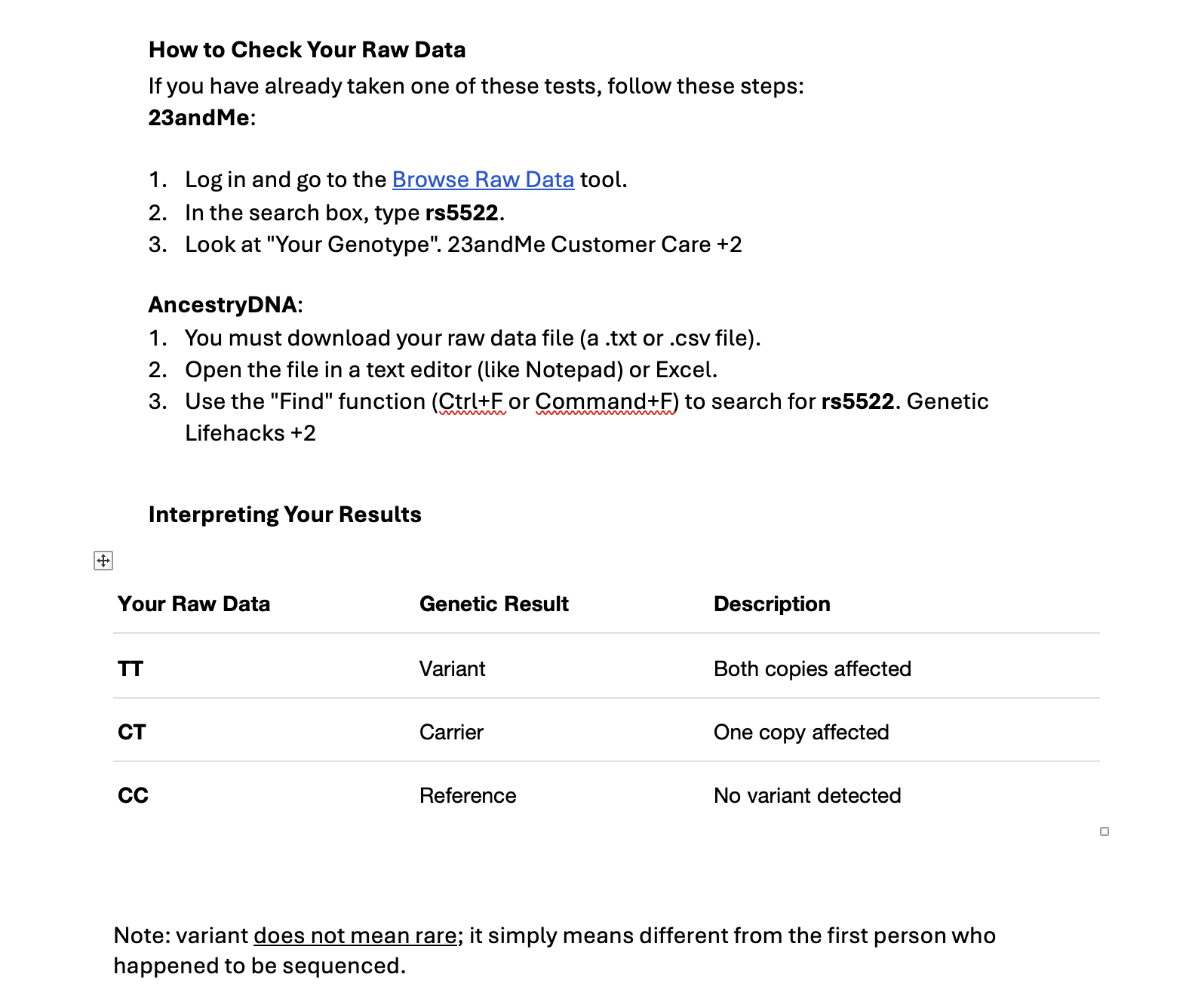
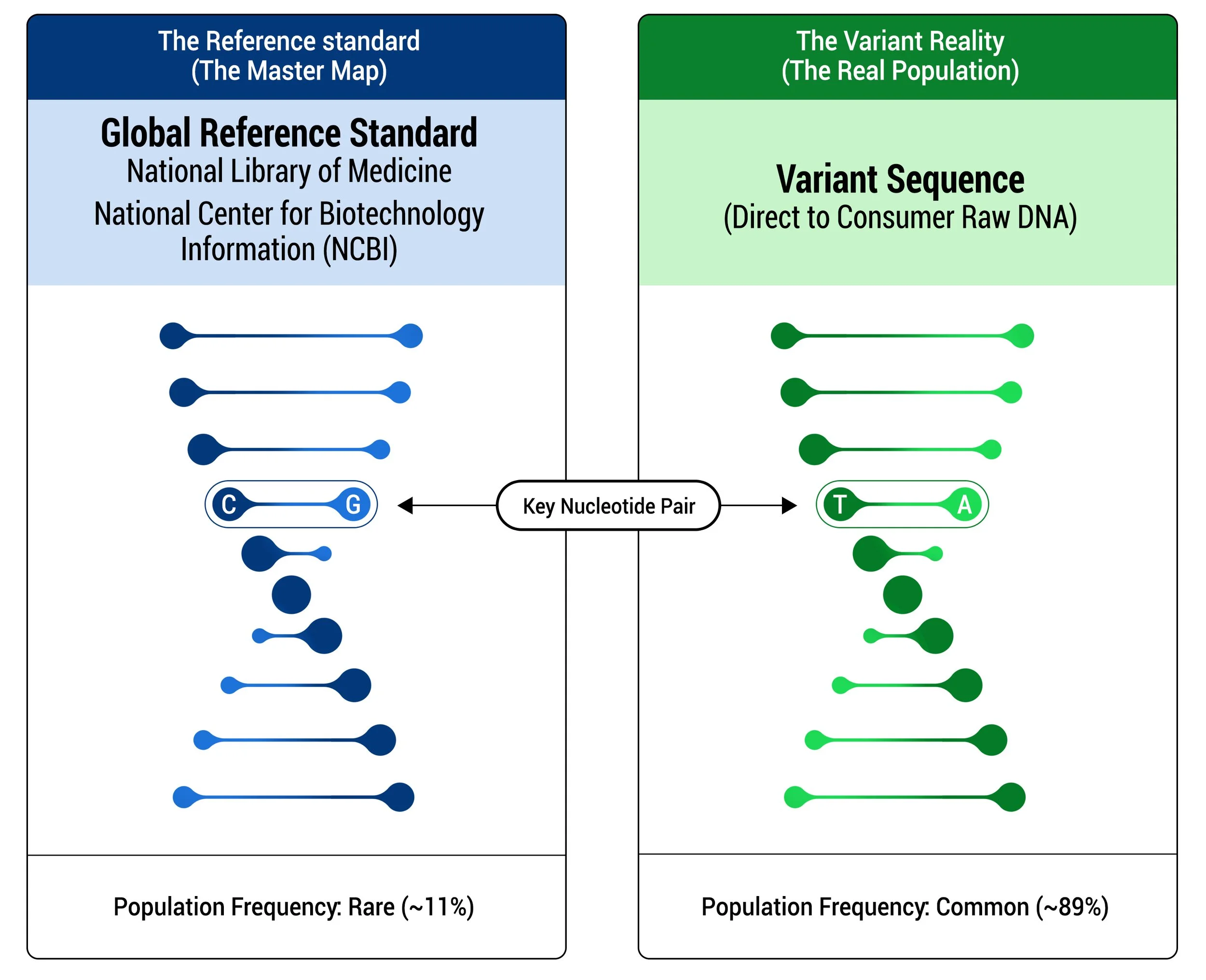
To address ME/CFS or prevent inflammatory conditions driven by MR overactivity under the rs5522 framework, the model proposes a precise, three-pronged protocol:
Targeting the Hyperactive MR: Utilizing a low-dose mineralocorticoid receptor antagonist, such as 25mg spironolactone (or eplerenone for male patients), to halt the baseline "cortisol steal" at the receptor level.
Supporting the Starved GR: Evaluating the addition of low-dose hydrocortisone—strictly for the specific subset of patients who present with symptoms of adrenal insufficiency—to see if it helps restore cellular energy and control inflammation.
Deploying Anti-Inflammatory Stabilizers: Integrating low-dose naltrexone (LDN) or a GLP-1 receptor agonist as secondary agents to control downstream vascular inflammation and allow mitochondrial recovery.
Clinician reference sheets are available here.
Question: Do I need to get genetic testing before trying and MR antagonist (spironolactone, eplerenone, finerenone)?
Answer: No, you don’t absolutely NEED to get genetic testing. The gene rs5522 variant drives the symptoms of many chronic diseases. If you suffer from fatigue, pain, allergies or treatment resistant obesity, your clinician may want to trial an MR antagonist. These medicines have a long safety profile and are often prescribed for conditions like acne. Nearly 90% of people have this variant, depending on ancestry, making it more likely that your symptoms are driven by rs5522, than not.
Question: Aren't these just regular water pills or diuretics?
Answer: Calling these medications 'water pills' is a common misnomer. Standard water pills act as simple diuretics, forcing the kidneys to dump water directly from the bloodstream. In contrast, these belong to a completely different class of medication known as mineralocorticoid receptor (MR) antagonists.
To understand how they work, think of the receptors on your cells like locks, and your body's hormones like keys. With this genetic condition, your locks are "greedy.” They pull keys in too fast and refuse to let them go, keeping the switch permanently jammed in the "on" position. This constant overactivity (stuck in “on”) is what drives your chronic disease symptoms.
This medicine does not stop your body from making keys. In fact, doctors often call these medicines 'aldosterone blockers,' but that is a mechanistic misstatement because it is actually blocking the mineralocorticoid receptor (MR) itself. In the rs5522 framework, the partial blockade stops the MR receptor from vacuuming up too much cortisol and lets it be used by the glucocorticoid receptors (GR). Instead of changing your hormone production, the medicine acts like a dummy key that is specifically shaped to slide into that greedy lock first. It plugs the hole and stays there. Because the greedy lock is blocked, the overactive switch finally calms down and your body gets relief without ever changing your actual hormone levels.
While clinicians might worry that an MR blocker will lower blood pressure in a patient with orthostatic intolerance (OI), once MR blockade frees up endogenous cortisol to properly regulate vascular integrity, low blood pressure is often able to rise and stabilize safely back to normal. In fact, data confirms spironolactone did not cause low blood pressure in women treated with it for hair loss or acne, even at doses 2 to 4 times higher than what is recommended in this low dose protocol.
Question: What if I starting Spironolactone made me feel tired or weak?
Answer: Doses should be low. Doses that are too high can impact electrolytes.
Additionally, if a low dose of spironolactone (or an alternative MR antagonist) made you more tired it might mean you need a baseline, external physiological dose of cortisol to keep your system from collapsing. In a body managing a continuous genetic capillary leak (rs5522), your adrenal glands are forced to run on high alert, producing constant cortisol to squeeze leaky blood vessels shut and keep your baseline blood pressure from crashing. Clinicians may opt to trial a standard physiological replacement dose of cortisol. This is typically 20 to 25 mg of hydrocortisone, split into divided daily doses, to stabilize your system.
Question: What is my doctor won’t prescribe an MR antagonist?
Answer: If your doctor isn't open to considering a safe medication that has been around for decades, it might be worth looking for another doctor.
If your condition is not listed below, you may still benefit from an MR antagonist like Spironolactone, Elperenone or Finereone. Your clinical should consider prescribing a low dose to reset the cortisol imbalance between your receptors. Routine monitoring of potassium is recommended.